
Trending
This story is from January 16, 2018
51 years on, Opinion Poll and the ‘asmitai’ debate
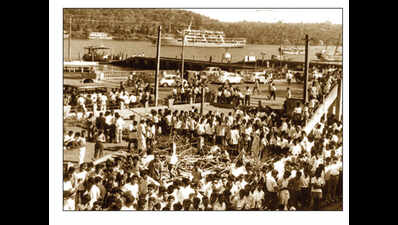
People gathered outside Institute Menezes Braganza, Panaji, on the counting day
Opinion Poll, 1967, the event that shaped Goa’s destiny was actually a spine-chilling borderline arithmetic, which kept the tiny region Goa separate to graduate into an independent state in 1987. The final outcome could have gone anyway if the Opinion Poll was fought and perceived only on language.

The poll was the triumph of the human geography of this petite land, which can boast of being a brand known worldwide for its secular traditions, liberal mindset, unique cuisine, festive spirit, zest for life and a tolerant outlook.
Against the backdrop of Goa’s demographic disadvantage, on account of the relative disability of numbers, it was imperative for Goa to be maintained as a separate democratic unit.
The debate on whether Goa could preserve the uniqueness of the Goan community and guard its identity (‘asmitai’) may not end with a clear affirmative answer. But definitely, Goa and Goans had access to all the democratic tools. Failure to make the best of opportunities are discernible. At the same time, the balance sheet of 51 years also record gains of Opinion Poll albeit accompanied by damages. Goa’s merger with any neighbouring state would have been a wash out for brand Goa and the pride of the macro community.
On the way forward, migration and immigration are turning out to be threats and challenges. Both are not new, as Goans have traditionally migrated from early times. Despite migration, what differentiates Goans is their sense of belonging and love for the land. Migration continues to be a means to escape from poverty and for a better quality of life. There is no conflict between migration and attachment to the soil. The reasons for immigration into Goa are also the same. Goa is perceived as the land of opportunities by the poor and unemployed. The vacuum created by migration is occupied through immigration. In the years to come, these less privileged sections of immigrants could be those who preserve the language and culture. I would submit that those who immigrate to satisfy their basic needs would serve Goa in future as opposed to those who storm Goa for speculative investments in land and real estate or motivated by Goa as a retreat destination.
The new saplings of communal hate and discord planted and nursed by fanatical groups and irrigated by political elements is the major threat to Goa’s identity. There are attempts to project Christians as anti-development because of their worry that development results in influx of Hindus. Gullible Hindus fall easy prey to such propaganda little knowing the loss to Goans as a whole. Fundamentalist elements are competing to match every cross on the street with a tulsi vrindavan and every chapel with a temple, and both these forces join together to deny even a burial place to Muslims!
During the days of the Opinion Poll agitation, the forces who espoused merger would describe Goan Christians as pro-Portuguese and today the Hindutva political brigade is making similar claims and dumping those who oppose coal and river nationalization as anti-national and unpatriotic. It is this positioning and implant of social venom that poses irreversible damage to Goa, Goenkar and Goenkarponn.
The way forward is to ensure that development and politics that work to the detriment of the above are disallowed as they are an antithesis of the struggle of the Opinion Poll. Otherwise, January 16 would be the date to light candles on the tomb of ‘asmitai’.
(The writer is former state election commissioner and educationist )
End of Article
FOLLOW US ON SOCIAL MEDIA




Hot Picks
TOP TRENDING
Trending Stories
In City
Entire Website
- 'We were treated like slaves, made to work for 15 hours a day': Tricked into Ukraine war, 3 from Karnataka return home
- 'My father was on the flight': Jaishankar opens up about 1984 Air India hijack
- Airtel CEO Gopal Vittal sends letter to Reliance Jio, Vodafone-Idea, Tata Tele and BSNL CEOs; here's what he said
- Prince Harry to celebrate 40th birthday away from Meghan Markle
- Haitian immigrant pet-eating row: Ohio woman accused of eating cat is US citizen, video is not from Springfield
- Kejriwal out of jail; 'CBI arrest only to frustrate ED case bail': SC judge
- Donald Trump reveals what Laura Loomer is to his campaign: 'I don't control her'
- Hamster Kombat Daily Cipher Codes and Combo Cards for September 14, 2024: Unlock up to 1 million coins
- Laura Loomer's photo with Donald Trump viral. People ask where's Melania, where's wedding ring
- Garena Free Fire MAX redeem codes for September 13: Win in-game goodies and rewards
- 'Were ready for no recording but ... ': Docs leave Mamata's home as another meet fails
- Kolkata rape-murder case: Ex-principal, policeman arrested for destruction of evidence
- 'I was molested in ambulance in which my husband was fighting for life'
- 'Nafrat ki dukaan pe ...': PM Modi attacks Congress over 'brutality' in US
- 'Look at Virat Kohli': Ex-Pak captain wants Babar to...
- Blast in central Kolkata leaves 1 person injured, area cordoned off
- Will Germany’s suspension of Schengen entry end the Europe dream?
- Bengaluru woman sparks controversy with comments about Swiggy delivery executive
- Trump defends 'loony' Laura Loomer amid MAGA meltdown
- 'Would not fit in': Princess Diana’s brother warned Harry about Meghan

Popular Categories
Hot on the Web
Top Trends
Trending Topics
World Largest HorseEID WishesGreen Apple BenefitsPriyanka Chopra TattooKottukkaali OTT ReleaseNarendra ModiGhaziabad Juice SellerHair LossSudha MurtyMalayalam ProducersIndia's Best Dancer 4Simi GarewalDilli BabuIndian National ParksLaung BenefitsVikas SethiApple iPhone 16Donald TrumpAadhar Card UpdateWordle Answer
Living and entertainment
Latest News
Kaun Banega Crorepati 16: Can you guess the answer for this Rs 3,20,000 question on Navy, which contestant Naman Jain incorrectly answered?IIM Jammu hosts 'Fostering Academia and Industry Partnerships' event at BengalaruLiverpool slump to shock 1-0 home defeat by Nottingham ForestVinith Venkatesh scores in ISL debut as Bengaluru FC edge past East BengalAnanya Panday urges all industries to form Hema Committee': 'Clearly, no one else is doing it but women'Nine arrested on charges of assaulting a Dalit woman at Kallukunta village in Kurnool district'Calling all Swifties for Trump': Donald's new campaign merch imitates Eras Tour shirtsWWE Hall of Famer Watches 15 Hours Of Wrestling Each WeekDallas Cowboys Set to Defend AT&T Stadium in Week 2 Clash with New Orleans SaintsTovino on training for Kalaripayattu in ‘ARM’: I practiced every single day, even if I had a hectic day on set8 animals that reproduce without matingDelhi Police Files FIR for Firecracker Celebration Outside CM Kejriwal's ResidenceThrowback: When Alia Bhatt responded to insecurity questions about Ranbir Kapoor, shut down gossipIndia's T20I captain Suryakumar Yadav turns 34: A glimpse into his stellar T20 careerThe 3 Strongest Zodiac Signs: Powerhouses of the Zodiac WheelMaoist killed in encounter in BastarDhruv Kapila's health setback shatters Indian pair's Vietnam Open semifinal hopesFormer Titans Cheerleader Danielle Sekelsky Begins WWE NXT Training
Copyright © 2024 Bennett, Coleman & Co. Ltd. All rights reserved. For reprint rights: Times Syndication Service